Select a fresh napa cabbage weighing about 6 pounds (approximately 3.17 kg). Look for cabbages with lots of green, smooth, and shiny leaves.
Remove any damaged outer leaves from the cabbage. Cut the cabbage in half lengthwise, making a small slit at the base to help with splitting.
Make another slit in the center of each half to split further, ensuring the inner parts are accessible for salting.
Soak the cabbage halves in cold water to make the leaves wet, which helps the salt to be absorbed more easily.
Sprinkle half a cup of coarse salt between the leaves of the cabbage, focusing more salt on the thicker stalk parts.
Turn the cabbage every 30 minutes to ensure even salting. Let it sit for about 2 hours total.
Prepare a porridge base for the kimchi paste. Combine 2 cups of plain water with 2 tablespoons of sweet rice flour (Mochiko powder) or all-purpose flour if sweet rice flour is unavailable.
Heat the mixture on the stove, stirring until it starts to boil. This should take about 9 minutes.
Add 2 tablespoons of brown sugar to the boiling mixture and stir until it becomes glossy. Then remove from heat and let it cool.
Peel, wash, and cut Korean radish into thin strips. Use about 2 cups of radish for the kimchi paste.
Chop fresh green onions and Asian chives (buchu). If chives are unavailable, use additional green onions. Optionally, use fresh minari (water dropwort) if available.
Prepare a puree of garlic (half a cup), ginger (about 2 teaspoons), and onion (about 1 cup) for the kimchi paste.
Combine the cooled porridge with the chopped garlic, ginger, and onion. Add half a cup of fish sauce and a quarter cup of fermented salted shrimp (Saeujeot), squeezing out the juice before chopping and adding.
Add hot pepper flakes to the paste. Use 1 to 2.5 cups depending on desired spiciness (2 cups recommended for a spicy version).
Mix all ingredients well to form a cohesive kimchi paste. Taste to ensure the flavor balance is correct.
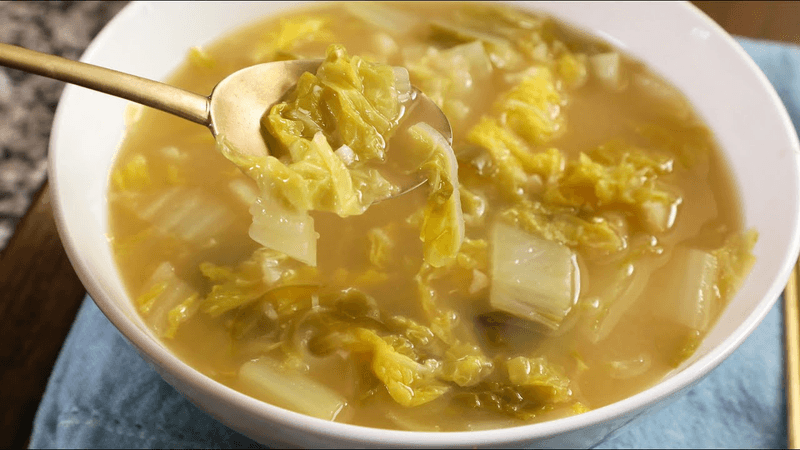
After salting for 2 hours, rinse the cabbage thoroughly under running water to remove excess salt. Repeat rinsing with fresh water if necessary.
Drain the cabbage well to remove excess water. Optionally, remove the tough center part of the cabbage.
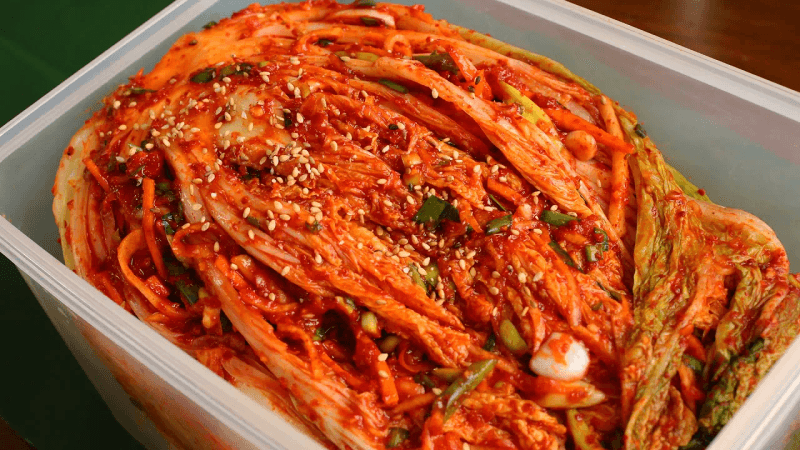
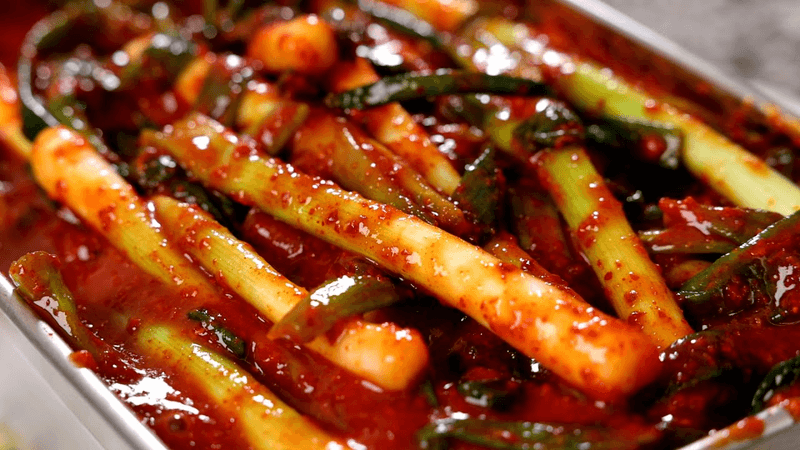
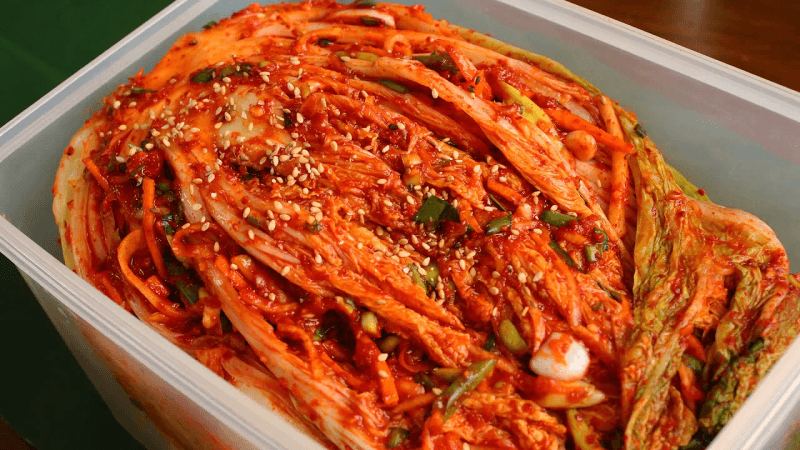
Spread the kimchi paste between each leaf of the cabbage, ensuring even coverage. Use gloves to avoid irritation from the spicy paste.
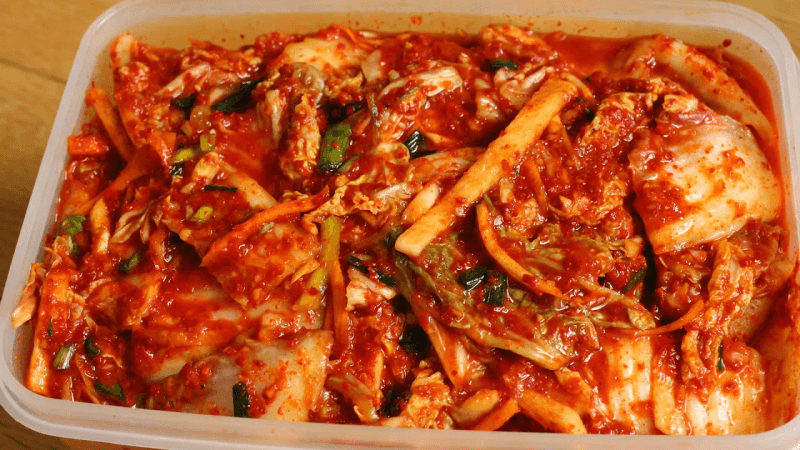
Place the prepared kimchi in a container (Korean earthenware pot Onggi or BPA-free plastic container). Press down to remove air pockets.
Let the kimchi sit at room temperature for 1-2 days to start fermentation. Check for a sour smell and bubbles as signs of fermentation.
Once fermentation begins (after about 36 hours), transfer the kimchi to the refrigerator to slow down the process. Press down to keep it submerged in its juice.
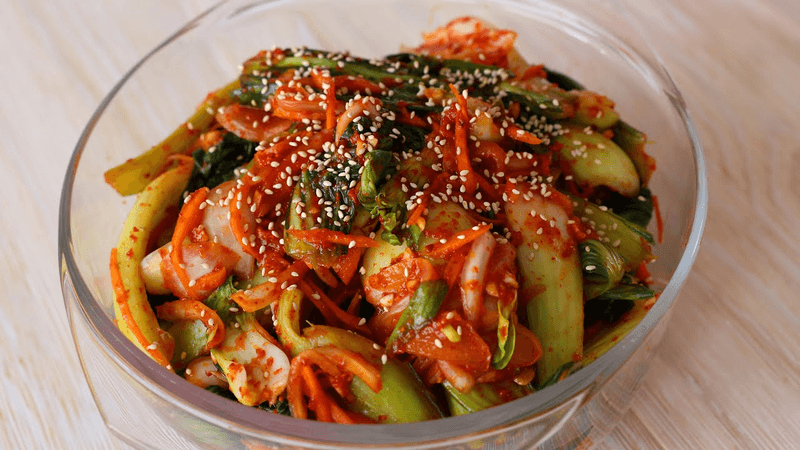
For immediate consumption, tear some kimchi leaves into bite-sized pieces (called Geotjeori). Sprinkle with toasted sesame seeds.
Serve fresh kimchi with hot steamed rice, preferably mixed grain rice with green peas, for a delightful snack.
Nutrition data is AI-estimated and may not be fully accurate.
This recipe was created by analyzing the video with AI. For full details, please refer to the original video.